
Building Smart Warehousing: The Role of WMS in Modern Manufacturing
Traditional ERP systems usually approach material management from the perspective of cost accounting rather than warehouse execution. Inventory is recorded as quantities received through delivery documents and quantities issued through material-release documents. This describes changes in total stock but overlooks critical shop-floor questions: Where is the material stored? How is it packed? How can it be traced? This limitation reflects the gap between accounting-oriented ERP design and actual warehouse operations.
From Item Records to Packing Units: The Logic of Physical Warehouse Operations
In real warehouse work, the smallest manageable material unit is often a packing-list unit rather than a simple item record. In bag manufacturing, each batch of raw materials or finished goods is commonly received, put away, transferred and shipped by package. Traditional ERP inventory records may not cover this packing logic, while a WMS is designed to manage it.
On-Site Advantages of WMS: From Scanning Receipts to Synchronized Data
When warehouse staff use a PDA to scan incoming materials, WMS can: • link materials, pallets and storage locations; • generate receiving documents automatically; and • complete the process without paper, keyboard or mouse input. The result is synchronized movement of materials and information, a basic requirement of a modern smart warehouse.
Zone-Based Warehousing: Using A, B and C Areas to Improve Dispatching
To improve execution and dispatching, a warehouse can be divided according to when materials will be used: • Zone A holds materials scheduled for production within the coming week and groups them by order; • Zone B temporarily stores medium-term materials by item; • Zone C contains slow-moving or dormant materials. A clear flow from pending inspection → Zone B → Zone A → production line creates a more dynamic and responsive material-feeding mechanism. Zone A is especially important because materials are often arranged by order number and style to support intelligent feeding and lean production.
Integrated Scheduling: Connecting Purchasing with Material Feeding
When WMS is connected with overall scheduling logic, it can support two key practices. 1) Follow up on materials after scheduling: when an order changes, the system can notify the supplier by email and update the required delivery date. 2) Schedule after materials arrive: once raw materials reach the factory, the system breaks the requirement into preparation tasks and assigns them to workstations. The material-preparation workstation acts as the execution point on the plant network, directing materials from Zone B into Zone A and closing the operational loop.
Coordination with Intelligent Equipment: AGVs and the Unmanned-Warehouse Vision
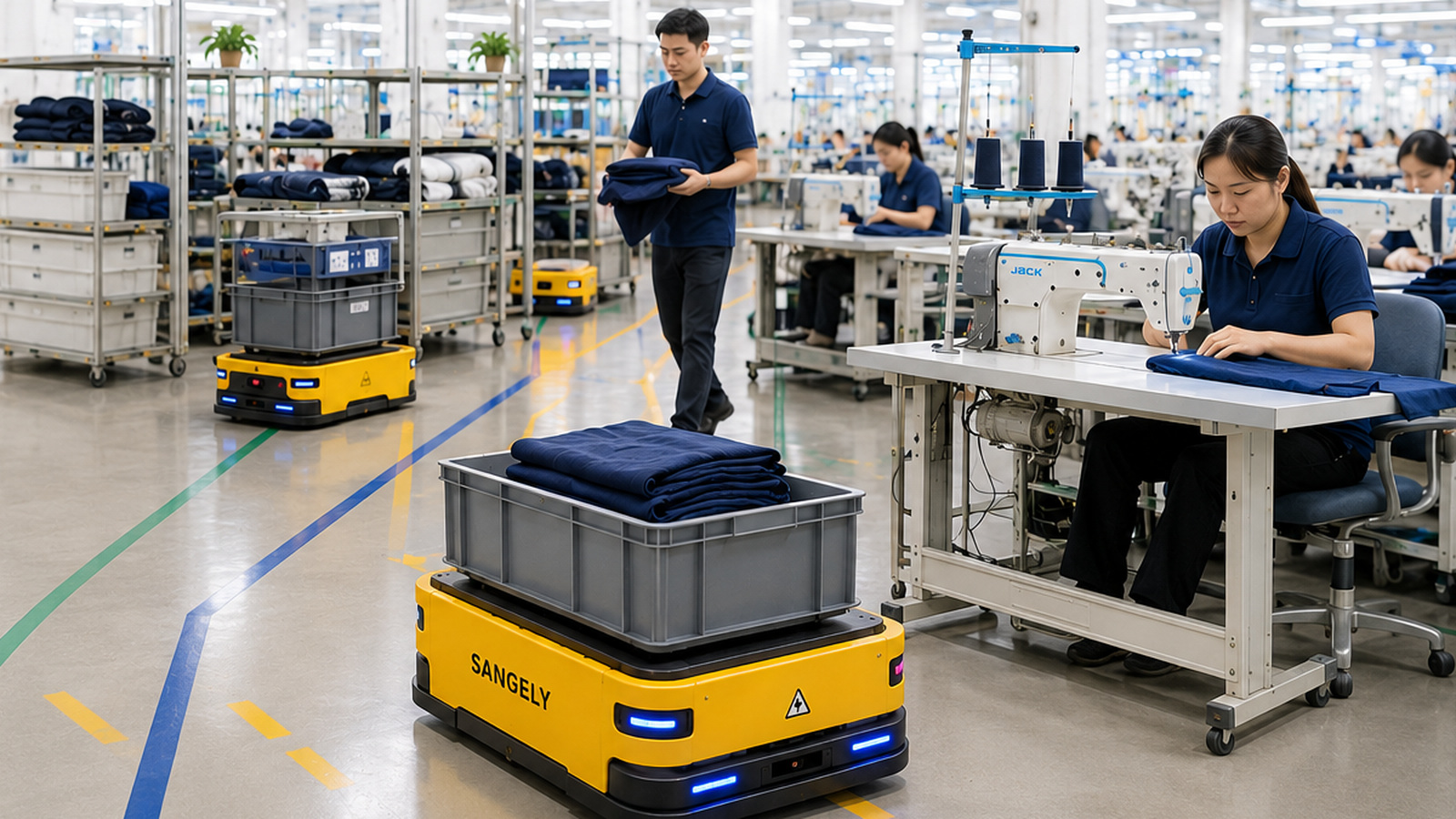
Traditional ERP normally provides total inventory quantities but offers limited detail about batches, packaging and storage locations. WMS can manage packaging information for each material unit, trace warehouse locations and support automated handling by AGV or RGV equipment. The long-term objective is an increasingly unmanned warehouse environment that reduces manual handling and improves operating efficiency.
Beyond a Software Tool: WMS as an Operating Ecosystem
Building WMS is not simply deploying another application. It means establishing a collaborative operating environment for smart manufacturing, lean production and a flexible supply chain: ERP provides the business axis, WMS coordinates warehouse execution, overall scheduling directs the flow, and material-preparation workstations carry out frontline tasks. Together they create an efficient data chain from order requirements to line feeding.
Different Scenarios: Factory Raw-Material Warehouses and E-Commerce Cloud Warehouses
A cloud warehouse serving e-commerce and a raw-material warehouse serving manufacturing have different priorities. • A cloud warehouse emphasizes fast response and final-order sorting for consumers. • A raw-material warehouse emphasizes supply-chain coordination and production-line support for the factory. Both seek synchronization between information flow and physical logistics, but they apply that principle to different operating scenarios.
Conclusion: Smart Warehousing Is Becoming a Manufacturing Requirement
In a manufacturing environment marked by uncertainty and frequent order changes, a responsive and integrated WMS is no longer a decorative addition. It is becoming essential infrastructure for modern factories.