
Many manufacturing companies do not know how much material is in the warehouse.
Inventory is already visible in ERP and corresponding data are available for procurement and acquisition. But when production requires material, there may still be another set of questions at the warehouse site: how does inventory information in the system correspond to the real warehouse? How does the daily warehousing that staff face enter the system? How can storage and manufacturing logistics continue to work together when materials are needed for production?
This means that the storage management of manufacturing companies cannot be confined to “the recording of stock numbers”.
The warehouse is a real work site.
The material is managed when it enters and will continue to flow as the production needs follow. With the expansion of the enterprise, even if the inventory data in ERP are complete, there may still be break points in storage sites and manufacturing logistics if these processes rely primarily on warehouse personnel experience and manual handling.
Sangely WMS is concerned with this part of the problem.
It hopes to bring the system closer to the real warehouse layout and to gradually link storage sites, ERP resource data and logistics equipment such as AGV, CTU, so that warehousing management can continue from simple data records to real logistics processes.
What Is WMS?
WMS, the warehouse management system.
For manufacturing companies, WMS should not be understood only as “another inventory system”.
ERP focuses more on material and resource data at the enterprise level, while there are a large number of more specific operational relationships at the warehouse site. Warehousing personnel are faced on a daily basis with physical warehouse space, material handling, logistics tasks and production site demand for materials.
So what WMS really needs to do is:
How the storage management of the system corresponds to the actual warehouse site and how the material continues to flow as the manufacturing process takes place.
If an enterprise knows only “what” and does not know how the storage site works, digitization remains at the level of resource recording.
Sangely WMS therefore continues to focus on real warehousing and manufacturing logistics.
ii. Why is WMS an issue for the boss?
The warehouse appears to be an implementing department, but it would in fact have a direct impact on the production rhythm.
Production plans are in place and workshops are still waiting if material logistics cannot keep pace; if there is material in the warehouse, storage management is difficult to replicate when the site operation is mainly maintained by a small number of skilled personnel, and the enterprise's size is expanded; and if ERP, the warehouse and logistics equipment are operating separately, the enterprise still needs a large number of people to communicate information between them.
So what the boss really needs to look at is not whether there's a software set in the warehouse.
More important is whether the storage site has entered the enterprise's overall manufacturing system, whether the resource information in ERP can continue to serve the real warehouse, and whether material handling can gradually reduce reliance on manual ad hoc coordination.
The real impact of warehousing is not just inventory management, but the ability of an enterprise to move materials to where they are needed at the production pace when they are needed.
This is also an important reason for WMS's synergy from a “storage tool” to a manufacturing system.
iii. Why does ERP still need WMS when it has an inventory management?
ERP and WMS are concerned at different levels.
ERP is more oriented towards the resource level of the enterprise, and needs to know what material is available, how resources are planned, and how these data are used to service orders and production.
WMS further entered the real operating environment of the warehouse.
The manufacturer ' s warehouse is not an inventory, but a site with real space and operational relationships. If the system page is completely disconnected from the actual warehouse mode of operation, it is easy for warehouse personnel to continue to rely on experience outside the system.
Sangely WMS sets the warehouse workpages according to the workshop and warehouse site layout, so that the system interface can be more closely linked to the real operating environment.
This is also a very important difference between WMS and simple stock management.
ERP informs the enterprise of the state of its resources, and WMS further brings storage management closer to the site where these resources are actually operational.
iv. Why does the WMS page need to be close to the real warehouse layout?
If the manufacturing software is designed for database fields only, warehouse personnel may see a complete set of data, which does not necessarily correspond to the way in which real work is done on a daily basis.
Warehouse sites have their own space logic.
How different areas are organized, where people work, and how materials move between warehouses and workshops are relevant to the actual site.
Sangely WMS allows the operation page to be set according to the warehouse and workshop site layout, so that the system works more closely to the real conditions of the plant.
It's not just a page that looks more like a warehouse.
Rather, it is to reduce the situation where “systems are a set of logic and on-site another set of logic”.
As the warehousing system moves closer to the real site, staff are more likely to work around the same set of business relationships and have a clearer on-site basis when enterprises follow up with ERP and automated logistics equipment.
Why does Sangely WMS need to be collaborative with ERP?
Warehouses are not independent of business operations.
The material in the warehouse comes from procurement and resource preparation, followed by continued service production. Therefore, if WMS only manages the inside of the warehouse, it is completely separated from the order, material and resource data in ERP, and the enterprise still needs to double-check the two systems manually.
Sangely WMS integrates and synergizes with ERP to enable storage management to continue to build on the available resource data of the enterprise.
What is really important here is not to discuss whether WMS is “belongs to ERP” or “be independent of ERP”, because different systems structures may have different ways of achieving it.
For manufacturing companies, it is even more noteworthy that:
The resource plan in ERP and the real operations in the warehouse cannot be the two sets of independent information for the long term.
When the relationship is gradually developed, the warehouse is not just a place to preserve material, but is beginning to become an important site in the operation of the manufacturing resources.
Why can't smart storage rely on AGV?
When many enterprises talk about intelligent warehousing, the first reaction is to add automation equipment such as AGV.
But a device that can move automatically does not mean that the warehouse is intelligent.
What really needs to be known about logistics equipment is what is currently a task of handling, how to participate in warehousing and workshop logistics, and how the system ' s operations relate to equipment implementation.
Sangely WMS supports the participation of AGV and CTU in material handling and facilitates the development of storage and workshop logistics towards automation through synergy between ERP, WMS and the automated handling equipment.
So the real value of AGV and CTU is not just to reduce the number of hand-pushers.
More importantly:
Equipment is beginning to become an implementation node in the manufacturing logistics system.
As the relationship between the system data and the automated handling equipment has evolved, the enterprise is building more than “automated equipment”, but rather a logistics capability that can operate around manufacturing operations.
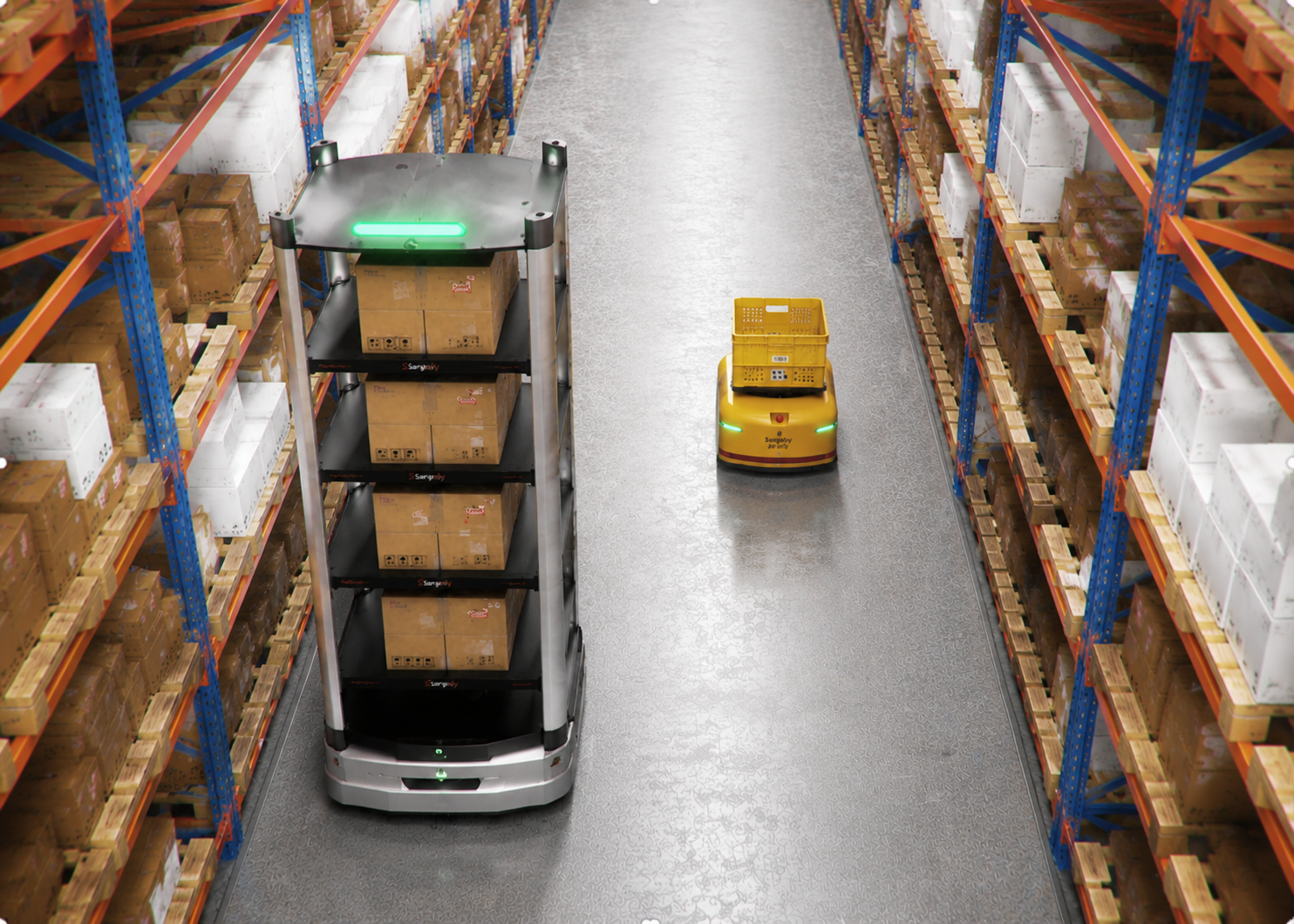
Why does WMS not only serve warehouses but also affect workshop logistics?
The manufacture of warehousing is ultimately service production.
The material will not remain in the warehouse and will need to continue to enter the workshop as manufacturing needs.
Therefore, WMS is not really facing a closed warehouse.
It also needs to understand the relationship between warehousing and production logistics.
The Sangely WMS application scenario includes the synergy of storage with ERP data and the involvement of AGV, CTU in material handling between the warehouse and the workshop.
This indicates that the value of WMS will continue to extend from within the warehouse to the manufacturing site.
The real importance for manufacturing companies is not whether the warehouse is “goodly managed” alone, but whether storage and logistics can continue to service the pace of production when materials are needed for production.
The warehouse is not outside production, but is itself part of the production rhythm.
What are the problems addressed by ERP, WMS and MES, respectively?
When manufacturing companies operate, resource planning, storage logistics and production implementation are three different issues.
Sangely ERP focuses more on orders, materials and enterprise resource planning (ERP) to inform enterprises of the next needs to organize their manufacturing resources.
Sangely MES further enters the production site, paying attention to how the mission was carried out and how the real production state generated feedback.
Sangely WMS, on the other hand, revolves around storage sites and manufacturing logistics, allowing for a gradual synergy between warehouse operations, ERP resource information and logistics equipment such as AGV and CTU.
It is therefore not recommended that the three be understood simply as a fixed one:
ERP WMS MES
A process.
It is more precisely understood that ERP is responsible for resource planning, MES is responsible for manufacturing execution, and WMS provides storage and logistics synergies around the entire manufacturing process.
What businesses really need is three types of capacity to work gradually around the same order and manufacturing process, rather than as much software as possible.
IX. Is an intelligent warehousing equivalent to "unmanned"?
Smart storage is not exactly the same as empty.
In a suitable logistics scenario, AGV, CTU and other automation equipment can further reduce manual handling and facilitate the development of warehousing and logistics towards a less human and automated approach.
For manufacturing companies, however, what really should be addressed is whether there is a clear relationship between systems, storage sites and logistics equipment.
If the underlying warehousing logic continues to rely on a great deal of manual experience, even if many additional automation equipment is added, it will be difficult to develop a stable and functioning intelligent logistics system.
Therefore, Sangely WMS is more concerned with the gradual development of synergies between warehousing sites, ERP data and automatic removal equipment.
Automation is the direction for further development and not the only criterion for the value of WMS.
Why is WMS not exactly the same as an electrician's warehouse?
The final service of the manufacturer ' s warehouse is production.
The central issue before it is not how consumer orders are quickly sorted, but how the material is related to enterprise resource plans and manufacturing sites.
Therefore, the manufacturing WMS needs to pay more attention to the connection between warehousing operations and production logistics.
For manufacturing companies, such as bags, handbags and shoes, materials are of a wide variety and are subject to frequent changes in production, and material in warehouses eventually needs to continue to flow around real production processes.
This is why Sangely WMS is concerned with the ERP synergy, the site layout, and the manufacturing of logistics equipment such as AGV, CTU.
What WMS really needs to access is not just “storage management”, but the enterprise's overall manufacturing logistics system.
XI. What should be addressed first when enterprises start building WMS?
The construction of WMS by manufacturing companies does not have to start with the purchase of automation equipment.
A more practical first step is to revisit the real storage site.
The enterprise can first ascertain how the warehouse is currently organized, how staff complete their operations on a daily basis, how the resource information in ERP enters the warehouse chain, and what material moving between the warehouse and the workshop remains highly dependent on manual coordination.
Once these fundamentals become clearer, WMS pages, ERP synergies and automated logistics capabilities such as AGV, CTU are introduced based on the actual scene.
The real importance of building WMS is not how many automatics are installed on the first day, but:
The logic of storage in the system allows for a real correlation with the logistics processes that are taking place in factories on a daily basis.
Only if this relationship is established first will subsequent automation have the basis for a stable operation.
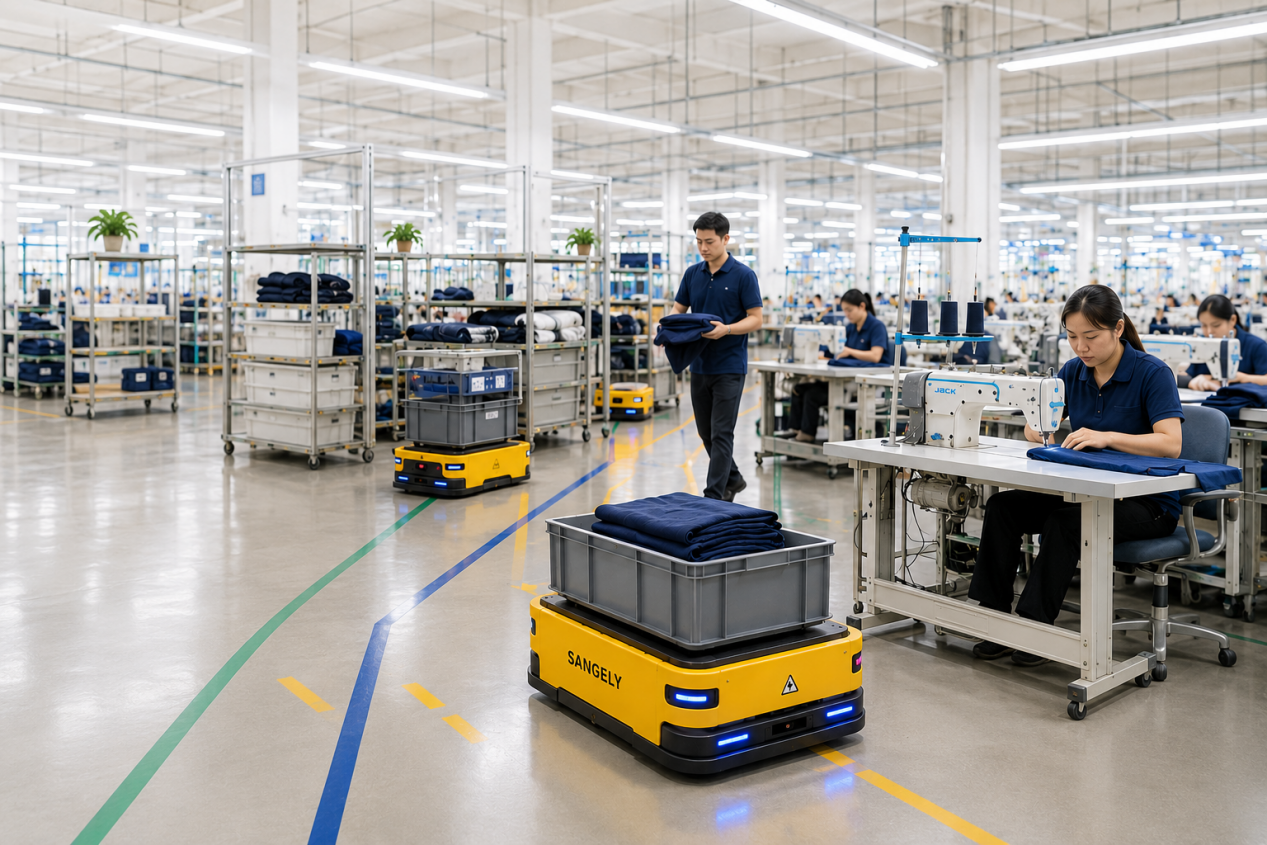
Conclusion: to make the material really follow the pace of manufacture
The WMS that is really needed by manufacturing companies is not just an additional set of inventory software.
ERP already helps enterprises understand resources, but real warehouses also need to face the continuing demand for on-site operations, logistics handling and production of materials.
Sangely WMS establishes operating pages based on the warehouse and workshop site layouts and, in synergy with automated handling equipment such as ERP and AGV and CTU, allows warehousing management to continue to enter the real logistics process from the resource information in the system.
From this perspective, there are two types of problems that WMS really needs to address: on the one hand, bringing storage management in the enterprise system closer to the real site; and, on the other hand, moving material from the warehouse to the workshop to a more stable logistics synergy.
This is why smart warehousing cannot be based solely on inventory numbers or on how much automation equipment enterprises have purchased.
What Sangely WMS really wants is for storage data, real sites and manufacturing logistics to evolve into the same set of operational relationships.
For manufacturing companies, a truly intelligent warehouse is not just about what it is.
More importantly:
The material can continue to enter where it is needed as manufacturing needs.
FAQ|XTERRM4X Common Problems
Q1: What Is WMS?
WMS is the warehouse management system. For manufacturing companies, not only is it concerned with inventory data, but there is a need for further access to real warehousing operations and manufacturing logistics to link material information in the system to warehouse sites.
Q2: ERP already has inventory management. Why also WMS?
ERP manages material more from the point of view of the enterprise's resources, while WMS further enters the real storage site. Sangely WMS allows for the creation of operating pages in line with the physical layout of the warehouse and workshop to bring storage management closer to the on-site working methods.
Q3: Can Sangely WMS work with ERP?
Yes. Sangely WMS integrates and synergizes with ERP to enable storage sites to continue to be based on enterprise resource data and to reduce information segregation between warehouse management and resource planning.
Q4: Does Sangely WMS support AGV and CTU?
Support. Sangely WMS may participate in material handling between AGV and CTU in storage and workshops, and allow the automated handling equipment to gradually enter the manufacturing logistics system. Specific equipment configurations and operating modalities need to be determined in conjunction with actual project scenarios.
Q5: Does smart storage have to be empty?
Not necessarily. Automation and humanization can be the direction of further development of intelligent warehousing, but first and foremost, a stable synergy between warehousing sites, ERP resource data and logistics equipment. For manufacturing companies, what is really important is that materials can flow continuously and accurately around manufacturing demand.