
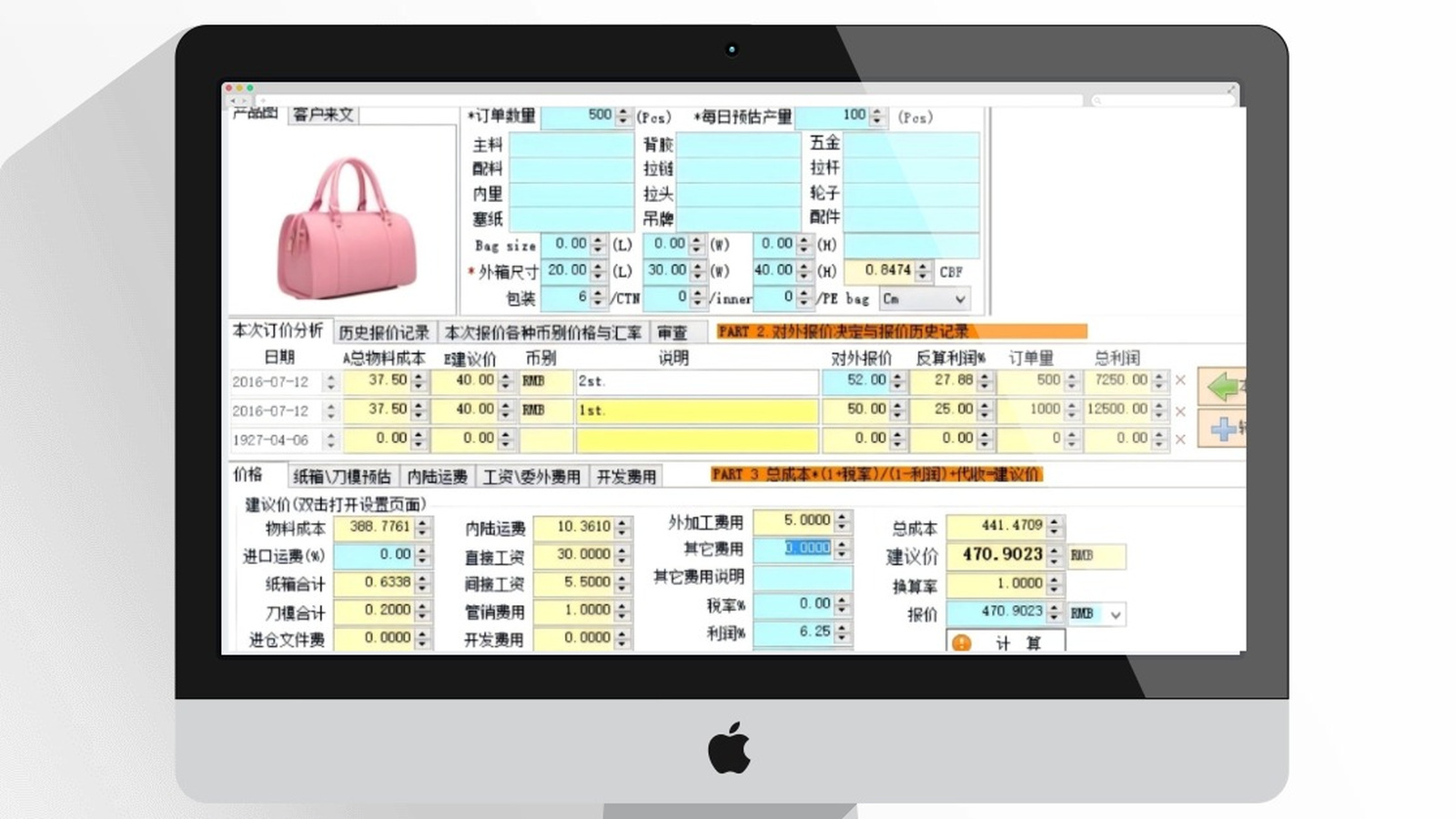
Foundational Architecture for Smart Manufacturing in the Bag Industry
Material coding has always been a foundation of enterprise information systems. Traditional coding logic often begins from a financial perspective, first separating raw materials, work in process and finished goods and then subdividing them into major and minor categories. This hierarchy is clear to finance teams, but it may not match how people actually work in a bag factory.
On the factory floor, employees first ask: “What material is this, and where is it used?”
Terms such as “main material,” “lining” and “zipper” are easier to understand and apply. Because materials in bag manufacturing are especially diverse and variable, a more intuitive and user-friendly coding system becomes critical.
1. The Original Design Goal: A Coding System the Factory Can Understand, Remember and Manage
More than thirty years ago, I first attempted to design a practical material-coding system for bag factories. The initial design combined every attribute layer by layer. It was logically rigorous, but the resulting codes exceeded 35 characters and were too long for practical use. I therefore redesigned the approach and developed an automatic coding program that compressed the code to eight characters and generated it through an “attribute → item name (code)” process. The method remains in use and has operated in more than one hundred manufacturing companies.
2. More Than Codes: A Data Foundation for Smart Manufacturing
Within the Sangely system architecture, a material code is not merely an identifier. It is the underlying data anchor for intelligent bag manufacturing, carrying information across design, purchasing, production, warehousing and financial accounting.
Using one coding system as the foundation makes it possible to connect the following modules:
• PDM product data management: CAD drawings enter during sample development and connect codes with files, attributes and sizes. • QR-code traceability: each code becomes a data entry point for production and logistics traceability. • Automatic BOM/BOR generation: material codes and process structures support the generation of material and routing lists. • ERP, MES, WMS, APS and workstation integration: codes continue across systems to support data coordination, workstation dispatching, task assignment and production scheduling. • Quotation and costing: one code provides a consistent accounting reference for standard and actual costs.
3. Integrated Systems Create Greater Efficiency Than Isolated Tools
Tool-oriented software traditionally operates in isolation, with one system solving one problem. This easily creates information silos and broken data chains. Sangely's architecture instead follows the principle of connecting the complete process and establishing integration at the data foundation.
The underlying idea is:
• One tool = one function. • An integrated system can produce more than ten times the combined operating value described in this framework.
Only when the process runs continuously from receiving a customer PDF through workstation execution and intelligent scheduling does the factory move from fragmented tools to a digital operating system.
4. Technology Builds the Future, but the System Determines How High It Can Go
A stable, standardized and extensible coding system is the starting point for every later technology application. Sangely can connect PDM, ERP, MES and WMS because the coding logic established a consistent foundation early in the architecture.
Building a future smart factory is not about pursuing impressive-looking tools. It is about strengthening the reliability and consistency of the underlying systems. This is difficult, meaningful work that requires time, accumulated experience and system discipline.
A skyscraper requires a deep foundation.
A team that wants to compete in the future cannot optimize only for individual convenience. It must consider overall standards and collaboration.
Through years of implementation, Sangely has connected multiple types of workstation systems and continues to follow a practical development path. A system built around a long-term vision can support a factory with a future.