
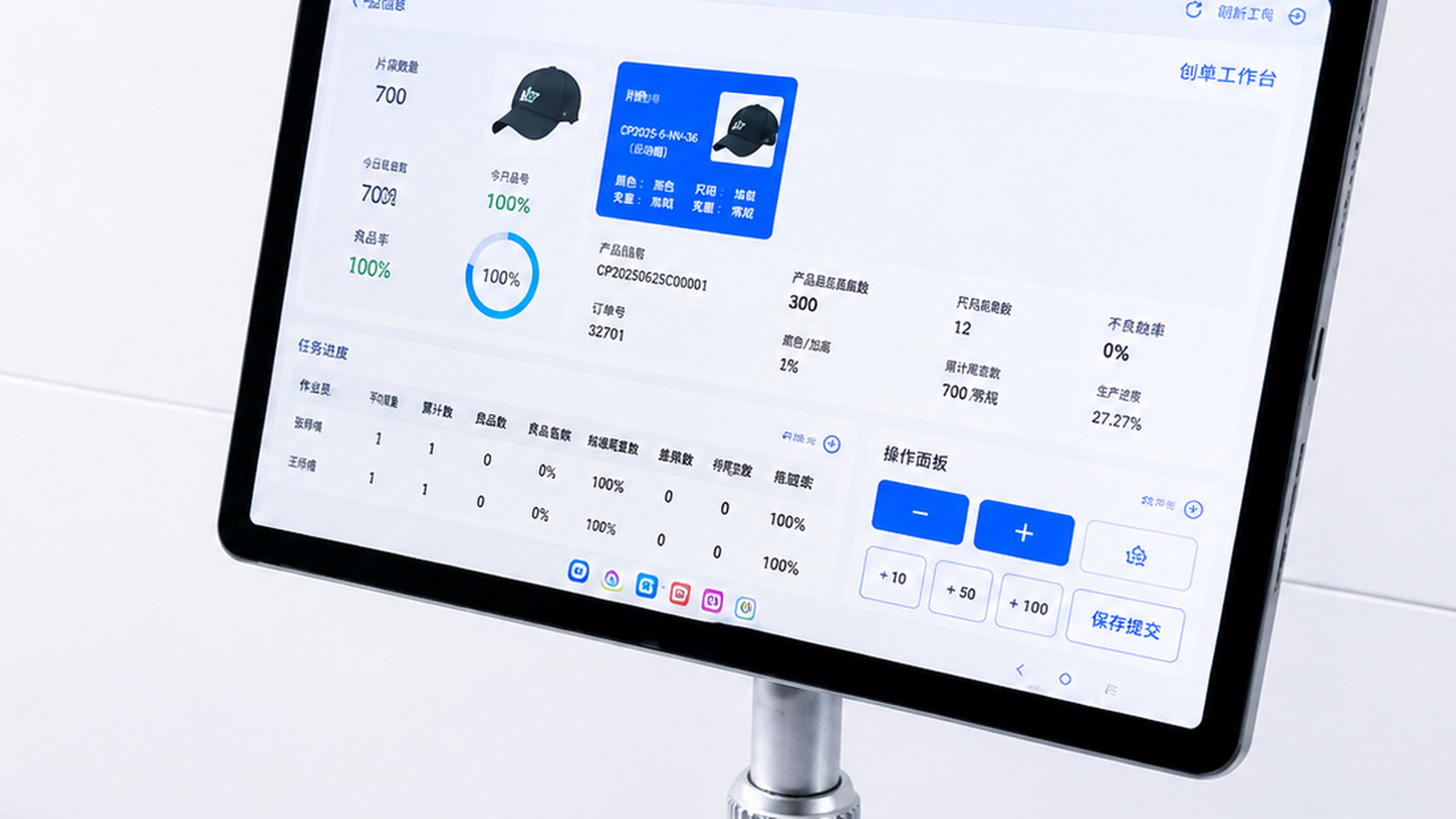
Traditional ERP systems often use one generic interface template for every user. Permission settings may simplify administration, but they can overlook the needs of the people who actually perform the work. In practice, every workstation—whether in development, production, warehousing, management or administration—has its own information dimensions, operating logic and collaboration process. Applying the same interface to every workstation restricts both efficiency and flexibility.
The Workstation Is the Enterprise’s Smallest Decision-Making and Execution Unit
A “workstation” is not limited to an operator on a production line or a manager in an office. It represents the combination of role responsibilities and task context, covering positions in development, design, scheduling, procurement and finance, as well as material spreading, cutting, sewing, inspection and plant services. Each workstation should have an interface, information scope and feedback method that closely match its actual tasks.
Multi-Workstation System Design: One Interface per Role, One Task per Terminal
In this system design, Sangely has developed multiple workstation interfaces, including:
PDM development workstation: integrates information search and feedback for sales and business staff, pattern engineers, industrial engineering and costing roles.
ERP workstation: serves production control, procurement, Production and Material Control (PMC), warehousing, finance and other management roles, with an emphasis on data flow and material traceability.
MES manufacturing workstation: covers execution roles such as material preparation, material spreading, cutting, sewing, final inspection, patrol inspection, line supervision and plant management. It also connects industrial engineering and human-resources roles for standard-time tracking and performance analysis.
The illustration shows the dedicated interface for a fabric-spreading workstation. The interface is clear and direct, with visible task targets such as the required number of layers, fabric specification and order number. It also displays efficiency progress and the marker layout, supporting intuitive shop-floor operation and real-time feedback.
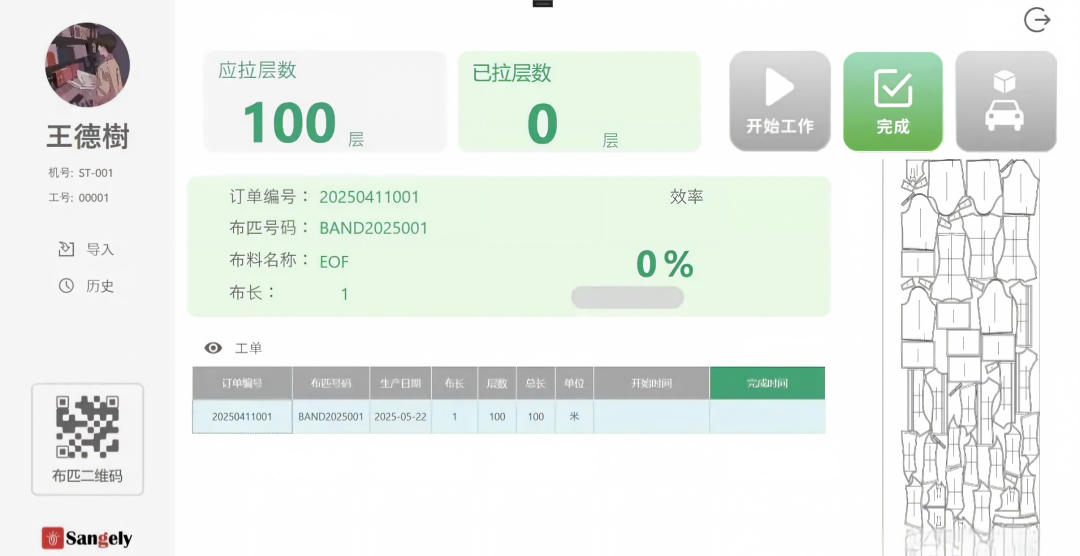
Dedicated fabric-spreading workstation interface
Driving Equipment and Capturing Data: Toward a Schedulable Workstation System
When this interface system is deeply integrated with PDM, CAD, ERP and MES, connected to automated equipment such as AGVs, fabric spreaders and vision-based cutting presses, and supported by automatic data-capture technologies such as QR codes, RFID and sensors, it can form an intelligent system organized around workstation scheduling. With PMC at the center of daily coordination, the system can automatically model the best work paths, task assignments and scheduling priorities, creating a manufacturing environment that is data-driven, workstation-centered and coordinated across systems.
This design is more than an improvement to the software interface. It is a critical step in moving manufacturers from “systems directing people” toward a human-machine collaborative scheduling system.